

As Ireland prepares to host the Michelin Guide Awards for the first time, the spotlight on Irish food has never been brighter. For Kevin Thornton, the moment is about perspective.
With decades at the highest level of the industry and the experience of achieving two Michelin Stars, Kevin brings a measured view on what Michelin recognition represents, how Irish cooking has evolved, and why consistency, discipline, and respect for produce matter.
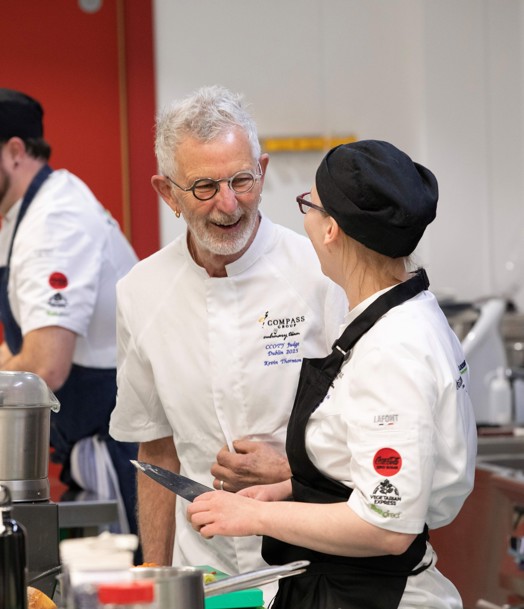
Ireland hosting the Michelin Guide Awards for the first time feels like a milestone. What does that moment mean to you personally?
It’s positive for the industry, but I don’t see it as overdue. Everything happens in its own time. When Michelin first began, the way it operated was completely different. There was no publicity, no announcements, no PR. The fact that Michelin is now openly coming to Ireland to announce stars reflects a change in how the guide operates.
Do you see this as recognition of how far Irish cooking has come, or more as an opportunity to show what’s next?
It’s recognition, but it’s also timing. Ireland always had exceptional produce, but what’s changed is awareness, education, and confidence. People are now learning how to use what we have well, rather than looking elsewhere for validation.
From your perspective, what’s changed most in Irish kitchens over the last decade to make this moment possible?
Nothing stays the same. Everything evolves. When we got our first star, there were very few starred restaurants across Ireland and the UK. Now there over a hundred. Irish food has moved forward because chefs are learning to respect the land and the sea more. You can be in the mountains picking mushrooms in the morning and out on the coast collecting sea urchins and serving them the same day. That kind of immediacy is incredibly rare, and it’s something Ireland has in abundance.
How relevant is Michelin today for chefs working in Ireland?
Michelin has always been relevant to chefs. Before, stars were quietly awarded. Now there’s excitement because Michelin is physically coming to Ireland to announce them. That makes it relevant for the industry.
With social media and other forms of recognition available, where does Michelin sit today among all the ways restaurants can be acknowledged?
You don’t need a Michelin star. You don’t need social media either, but you do need standards. The danger is setting your standards based on what you think someone else wants. You should set your own standards. Recognition will come if it’s deserved. Social media can be useful, but chasing validation is dangerous. That’s not cooking. That’s distraction.
What do you think Michelin understands well about Irish food culture, and where might there still be gaps?
This comes back to education. For a long time, Irish food was dismissed as basic, cabbage, stew, baking, even though the produce itself was extraordinary. The real job is simple. Take great produce and don’t ruin it. That’s still the gap. Understanding the value of what’s already here. Ireland has some of the best produce of any country.
Does the added spotlight bring opportunity, pressure, or both for Irish restaurants?
It brings both. The industry is under pressure, so any recognition helps. But accolades don’t replace the work. You’re only as good as the meal you cooked yesterday. The real accolade is what’s on the plate, how you make people feel, and the respect you show your craft.
Is it possible to pursue Michelin standards while protecting the health and sustainability of a kitchen team?
It depends on how the business is run. Standards require discipline, both commercial and personal. If the fundamentals aren’t right, creativity collapses. Sustainability comes from structure.
Do you think Irish chefs are getting better at defining success on their own terms?
I think we are more comfortable in our own skin now. We don’t need someone to tell you you’re good. You know if you are. Chasing approval is dangerous if you don’t understand what you’re chasing. Ireland has an opportunity to set standards based on produce and integrity.
Is there a distinctly Irish approach to fine dining emerging now?
Yes, but it was always there. What’s changed is confidence and accessibility. Younger chefs are grounding their food in heritage, land, and produce, rather than importing identity from elsewhere. Reading about food is one thing. Handling it, feeling it, and respecting it is another.
Are there regions or styles of Irish cooking you’d like to see better recognised?
Ireland didn’t historically develop strong regional food cultures because of our past. Food wasn’t abundant or even available. That’s changing. Awareness takes time. Food is memory, and memory takes generations to rebuild.
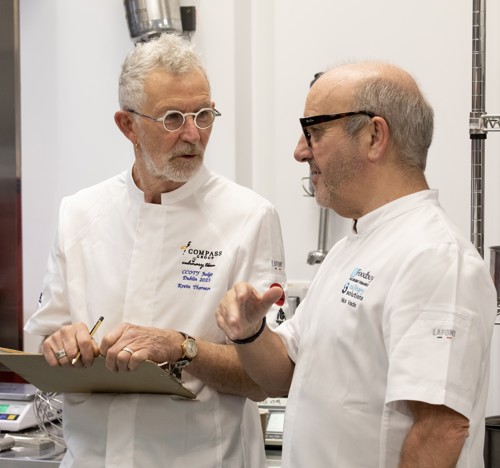
You’ve played a formative role in shaping modern Irish dining. How do you reflect on that journey now?
I don’t reflect much. The past is the past. What matters is where we’re going. I feel privileged and lucky to have worked with great people and lucky to have done what I do, but dwelling on it isn’t useful. Learning and passing things on is. Muriel and I are enjoying our business “Kooks” that we started when we closed Thornton’s and it allows our creativity to continue beyond the walls of the restaurant. We host small groups at our home for Chef’s table events and also cook for private clients at their homes.
What should young chefs understand about Michelin before chasing it?
Your star is your name. Be honest about what you’re doing, cook for yourself first, and stay on the path you’ve chosen. Recognition isn’t something you demand. It arrives when it’s earned.
What excites you most about the next generation of Irish chefs?
They’re confident enough to push boundaries. They’re not copying, they’re defining. Achieving two stars is incredibly difficult, and many young chefs are doing extraordinary work without needing validation.
You work closely with Compass Ireland. How has that experience changed your view of the food service industry?
Before working with Compass, I didn’t appreciate the scale, the talent, or the complexity involved in cooking for larger numbers. There is a great team in Compass expertly led by Shay Kendrick and the standards being set are genuinely impressive.
What surprised me most is how similar the pressure and responsibility feel to restaurant life but structured in a way that allows people to have a life as well. That balance is rare in hospitality.
Do you think food service offers a different, more sustainable path for chefs today?
Absolutely. Restaurant life is intense. You miss weddings, funerals, birthdays. You think you have balance. In food service, chefs can still cook at a high level, but they can also see their families, have weekends, and build a long-term career.
That matters. If you want people to stay in the industry, you have to offer a way of living as well as a way of working.
Michelin doesn’t traditionally recognise food service. Should it?
Food service sets its own standards. It’s such a large and diverse sector that it would be difficult to judge in the same way as restaurants, but that doesn’t mean the standards aren’t there.
What’s important is that chefs in food service are doing serious work, feeding large numbers of people well, every day. That consistency and responsibility shouldn’t be underestimated.
If someone was visiting Ireland and asked you where to eat to understand Irish food at its best, where would you send them?
There are many places. Liath in Blackrock pushes boundaries, Patrick Guilbaud, Dede in West Cork, Kai in Galway. Dax is another restaurant that understands a restaurant isn’t just about the kitchen, front and back of house must work together at the same level.
I’m always drawn to family-run or chef-owned places. When people have their name and livelihood tied to a restaurant care and responsibility really matter.
Finally, many will want to know: are we ever going to see a Thornton’s 2.0?
We are very happy doing what we are doing now - you don’t go backwards, you go forwards. At this stage, it’s about connection, learning new things, and passing experience on and that’s where my focus is now.


